


Korean spinach side dish, known as Sigeumchi Namul, is a true testament to the beauty of simple, fresh ingredients. If you’ve ever enjoyed a vibrant Korean meal, chances are this delightful dish graced your table. It’s universally loved for its incredible versatility and its ability to add a burst of freshness and subtle savory notes to any spread. What makes Sigeumchi Namul so special is its deceptive simplicity. Just a few key seasonings – sesame oil, garlic, and soy sauce – transform tender blanched spinach into something truly addictive. It’s a dish that’s both healthy and incredibly satisfying, offering a welcome contrast to richer flavors. I find myself returning to this Korean spinach side dish time and time again, whether as a quick appetizer or an essential component of a balanced banchan spread. Its bright green hue and delicate texture are a feast for the eyes as well as the palate.

Sigeumchi Namul: A Simple and Nutritious Korean Spinach Side Dish
Korean cuisine is renowned for its vibrant flavors and an abundance of healthy, flavorful side dishes called banchan. Among these, Sigeumchi Namul, a simple yet utterly delicious seasoned spinach, stands out as a true staple. It’s incredibly easy to make, incredibly versatile, and packed with nutrients. Whether you’re a seasoned Korean food enthusiast or just dipping your toes into this exciting culinary world, Sigeumchi Namul is a fantastic dish to master. It’s the perfect accompaniment to almost any Korean meal, adding a fresh, savory, and slightly nutty element that balances richer flavors beautifully. What I love most about this dish is its simplicity; you can prepare it in under 15 minutes, making it ideal for busy weeknights or when you need an extra dish to round out a spread. Let’s get started on making this delightful Korean spinach side dish!
Ingredients:
Preparing the Spinach
The first step in creating our Sigeumchi Namul is to prepare the star ingredient: the spinach. It’s important to start with fresh, vibrant spinach. Gently rinse the spinach under cool running water, making sure to get in between the leaves to remove any grit or dirt. Once rinsed, inspect the ends of the spinach bunch. You’ll want to trim off any tough or woody stems. For larger spinach leaves, you might also want to give them a quick chop into more manageable, bite-sized pieces. This will make the dish easier to eat and ensure the spinach cooks evenly. After trimming, give the spinach another gentle rinse to ensure it’s perfectly clean and ready for cooking.
Cooking the Spinach
Now, we’ll move on to the cooking phase. This is where the spinach transforms into tender, flavorful goodness. You have a couple of excellent methods for cooking the spinach, both of which are quick and efficient.
Blanching Method (Recommended)
This is my preferred method as it retains the most vibrant green color and a pleasant, slightly crisp texture in the spinach.
1. Bring a pot of water to a rolling boil. You want the water to be very hot to quickly cook the spinach.
2. Once the water is boiling vigorously, carefully add the prepared spinach to the pot. Stir it around gently with tongs for just about 30-60 seconds. You’ll see the spinach wilt almost immediately. The goal is to cook it through but not overcook it into mush.
3. While the spinach is blanching, prepare a large bowl filled with ice water. This is crucial for stopping the cooking process instantly. As soon as the spinach is wilted, use a slotted spoon or tongs to immediately transfer it from the boiling water into the ice bath. This shock in cold water will preserve its bright green color and prevent it from becoming limp and overcooked. Let it sit in the ice bath for about a minute.
Steaming Method
If you prefer steaming, you can also achieve a wonderful result.
1. Fill the bottom of a steamer pot with about an inch of water and bring it to a boil.
2. Place the prepared spinach in the steamer basket.
3. Cover and steam for 2-3 minutes, or until the spinach is just wilted and tender. Be careful not to over-steam.
4. Once steamed, immediately transfer the spinach to a bowl to cool slightly.
Draining and Squeezing
After blanching or steaming, the spinach will still hold a lot of water. This is a critical step to avoid a watery namul.
1. Once the spinach has cooled enough to handle, take handfuls of it and gently squeeze out as much excess water as possible. You want to get it quite dry. Don’t be afraid to wring it out; this will concentrate the flavor and prevent the final dish from being soggy.
2. Transfer the squeezed spinach to a clean bowl. You can also place it on a cutting board and gently press down on it with your hands to expel more water. Ensure you’ve removed a good amount of moisture before proceeding to the seasoning stage.
Seasoning the Spinach
This is where the magic happens and our simple spinach transforms into a flavorful banchan.
1. Add the finely minced garlic and chopped green onion to the bowl with the squeezed spinach.
2. Next, pour in the soy sauce and add the salt. Remember that soy sauce is already salty, so start with the suggested amount of salt and you can always adjust later if needed.
3. Drizzle in the toasted sesame oil. The toasted sesame oil is what gives Sigeumchi Namul its characteristic nutty aroma and rich flavor. This is not something you want to skip!
4. Finally, sprinkle in the toasted sesame seeds. These add a wonderful texture and another layer of nutty flavor.
5. Using your hands or a spoon, gently but thoroughly mix all the ingredients together. The best way to ensure everything is evenly distributed is to use your hands. Gently toss and mix until every strand of spinach is coated with the seasonings. Taste and adjust the seasoning if necessary, adding a pinch more salt or a touch more soy sauce if you prefer.
Serving Your Sigeumchi Namul
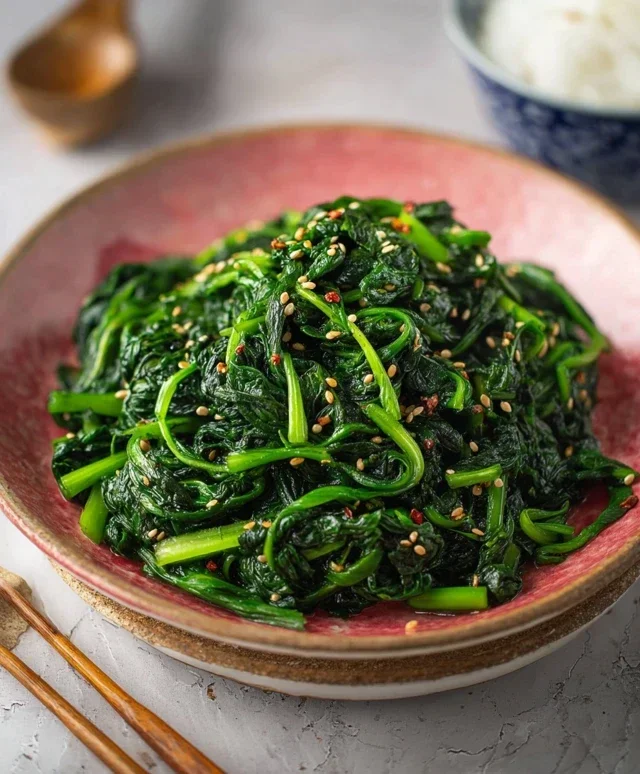
Once everything is mixed, your delicious Sigeumchi Namul is ready to be served! It’s typically served chilled or at room temperature. It’s a wonderful addition to any Korean meal, alongside rice, bulgogi, bibimbap, or any other of your favorite Korean dishes. You can also enjoy it as a light snack or a healthy side for Western meals. The vibrant green color, the savory aroma, and the fresh, nutty taste will surely impress! It’s a simple dish that brings a lot of flavor and health benefits to your table. Enjoy!
Conclusion:
There you have it – a simple yet incredibly satisfying Korean Spinach Side Dish, or Sigeumchi Namul! This recipe is fantastic because it’s so quick to prepare, packed with nutrients, and bursting with fresh, savory flavor. It’s the perfect way to add a vibrant green element and authentic Korean taste to any meal. Don’t be intimidated by the simple ingredients; the magic happens when they all come together, creating a dish that’s both healthy and delicious. I really encourage you to give this Sigeumchi Namul a try, especially if you’re looking to explore the world of Korean banchan!
This versatile side dish pairs beautifully with almost anything. It’s a staple alongside Korean BBQ, bibimbap, and jjigae (stews). You can also enjoy it as part of a larger banchan spread, or even toss it into a noodle bowl for an extra boost of freshness. Feel free to get creative with variations! Some people like to add a tiny pinch of sugar for a hint of sweetness, or a drizzle of sesame oil right before serving for an intensified aroma. You could even experiment with adding a few toasted sesame seeds for a delightful crunch.
Frequently Asked Questions:
Can I use frozen spinach instead of fresh?
Yes, absolutely! If using frozen spinach, make sure to thaw it completely and squeeze out as much excess water as possible. This is crucial to prevent your Sigeumchi Namul from becoming watery. You might need to adjust the seasoning slightly depending on how much water remains.
How long does Sigeumchi Namul last in the refrigerator?
This Korean spinach side dish is best enjoyed fresh, but it can be stored in an airtight container in the refrigerator for about 2-3 days. The flavor and texture are optimal on the first day, so try to consume it within that timeframe for the best experience.
Is it okay to skip the garlic?
While garlic adds a wonderful depth of flavor, you can omit it if you have an aversion or dietary restriction. The dish will still be delicious with just the sesame oil, soy sauce, and green onion, though it will have a slightly milder taste profile. It’s a very forgiving recipe!
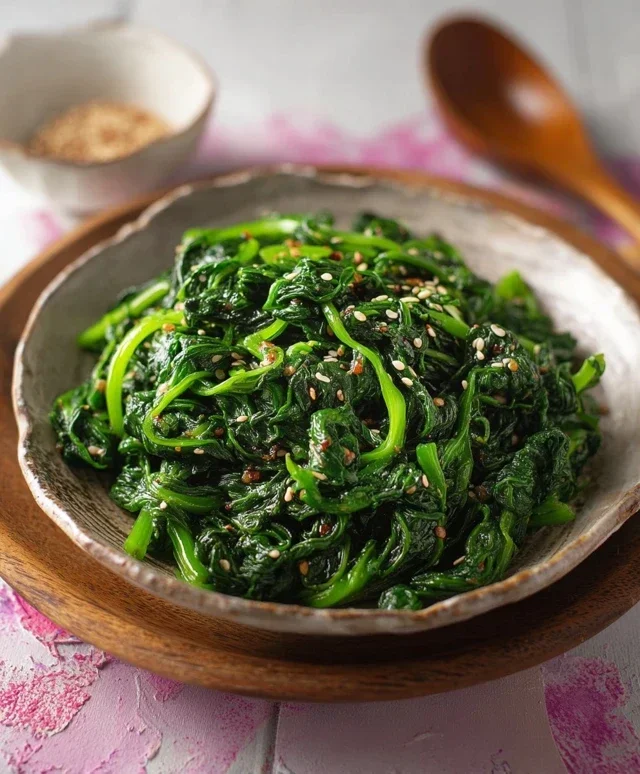
Korean Spinach Side Dish (Sigeumchi Namul)
A classic Korean banchan (side dish) made with blanched spinach, seasoned simply for a refreshing and healthy addition to any meal.
Ingredients
-
1 bunch (10 oz) spinach (ends trimmed)
-
1 clove garlic (finely minced)
-
1 stalk green onion (chopped)
-
2 teaspoon soy sauce
-
1/8 teaspoon salt
-
2 teaspoon toasted sesame oil
-
2 teaspoon toasted sesame seeds
Instructions
-
Step 1
Wash spinach thoroughly and trim any tough ends. -
Step 2
Bring a pot of water to a boil and blanch the spinach for 30-60 seconds until wilted but still bright green. -
Step 3
Immediately drain the spinach and rinse with cold water to stop the cooking process. Squeeze out as much excess water as possible. -
Step 4
In a bowl, combine the squeezed spinach with minced garlic, chopped green onion, soy sauce, and salt. -
Step 5
Add toasted sesame oil and toasted sesame seeds. Gently toss to combine all ingredients evenly. -
Step 6
Serve immediately as a refreshing banchan.
Important Information
Nutrition Facts (Per Serving)
It is important to consider this information as approximate and not to use it as definitive health advice.
Allergy Information
Please check ingredients for potential allergens and consult a health professional if in doubt.



Leave a Comment