
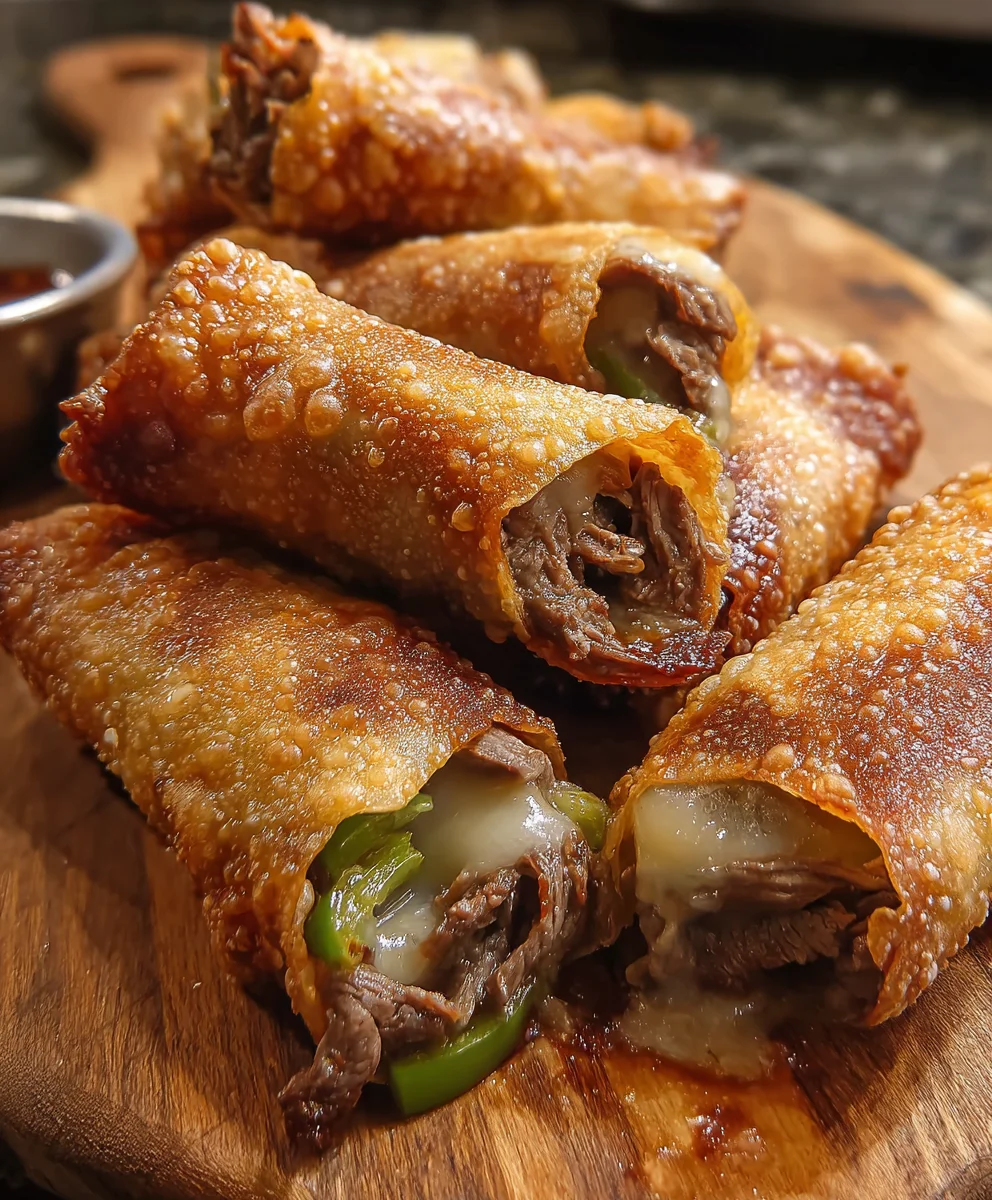
Philly Cheesesteak Egg Rolls are about to become your new obsession, and trust me, you’ll wonder why you haven’t made them sooner. Imagine the savory, cheesy goodness of a classic Philadelphia cheesesteak, all wrapped up in a crispy, golden-brown egg roll shell. It’s a flavor explosion that takes a beloved sandwich and transforms it into an irresistible appetizer or a fun, handheld meal. We all love the comforting, nostalgic taste of a good cheesesteak, but there’s something undeniably addictive about that satisfying crunch and the way the warm, gooey filling oozes out. What makes these Philly Cheesesteak Egg Rolls truly special is the brilliant fusion of textures and tastes – the tender, thinly sliced steak, the melted provolone and mozzarella cheese, and those sweet, caramelized onions all harmonizing perfectly with the delicate, crisp wrapper. Get ready to impress yourself and everyone around you with this genius culinary mashup!

Ingredients:
- 1 large onion, chopped
- 1 large green bell pepper, chopped
- 1 pound thinly sliced beefsteak (ribeye, sirloin, or sandwich steak)
- Salt and pepper, to taste
- 1 cup provolone cheese, shredded
- 8 egg roll wrappers
- 1 egg, beaten (for sealing wrappers)
- Vegetable oil, for frying
Preparing the Filling
First things first, let’s get our flavorful filling ready for these delicious Philly Cheesesteak Egg Rolls. In a large skillet or wok, heat about 1 tablespoon of vegetable oil over medium-high heat. Once the oil is shimmering, add your chopped 1 large onion and 1 large green bell pepper. We want to sauté these until they’re tender-crisp and slightly softened, which usually takes about 5-7 minutes. Stir them occasionally to ensure even cooking. The aroma should start to fill your kitchen, a good sign of the deliciousness to come!
Once the onions and peppers have softened, it’s time to add the star of the show: the thinly sliced beefsteak. I prefer using ribeye for its marbling and tenderness, but sirloin or sandwich steak works wonderfully too. Add the 1 pound of thinly sliced beefsteak to the skillet. Now, this is where seasoning is key! Generously sprinkle in salt and pepper, to taste. I like to use a good pinch of both. Break up the beef as it cooks and stir it into the vegetables. You’ll want to cook the beef until it’s no longer pink and is nicely browned. This typically takes another 5-7 minutes. Don’t overcrowd the pan; if necessary, cook the beef in batches to ensure it browns properly rather than steaming. Once the beef is cooked through, drain any excess grease from the skillet.
Now, for the cheesy goodness that makes it a cheesesteak! Turn off the heat. Sprinkle the 1 cup of shredded provolone cheese over the beef and vegetable mixture. Stir gently until the cheese is mostly melted and coats the filling. We’re not aiming for a completely uniform melt at this stage, as it will continue to melt inside the egg rolls during frying. The residual heat will do most of the work. Taste the filling one last time and adjust the salt and pepper if needed. Let the filling cool for at least 10-15 minutes before you start assembling the egg rolls. This is crucial to prevent the egg roll wrappers from becoming soggy and to make them easier to handle.
Assembling the Egg Rolls
With our delicious Philly cheesesteak filling cooled, we’re ready to assemble these fantastic Philly Cheesesteak Egg Rolls. Lay one of the 8 egg roll wrappers flat on a clean, dry surface. I like to work with them one at a time to keep the others from drying out. Position the wrapper so that one corner is pointing towards you, like a diamond. Spoon about 2-3 tablespoons of the cooled filling onto the lower third of the wrapper, leaving about a 1-inch border on either side. Don’t overfill them, as this can make them difficult to close and more likely to burst during frying. Distribute the filling evenly in a compact line.
Now, it’s time to fold. Take the bottom corner of the wrapper (the one closest to you) and fold it up tightly over the filling. Next, fold in the left and right corners to create a neat package, almost like an envelope. Brush a little of the beaten egg along the top edge of the wrapper. Then, continue to tightly roll the egg roll upwards, sealing the edges with the egg wash as you go. Press gently to ensure a secure seal. The beaten egg acts as our edible glue, making sure your delicious filling stays tucked away inside. Repeat this process for all 8 egg roll wrappers and filling. You should end up with 8 beautifully formed egg rolls, ready for their golden-brown transformation.
Frying for Perfection
This is the final and arguably the most satisfying step – frying your Philly Cheesesteak Egg Rolls to crispy perfection! In a large, heavy-bottomed pot or deep fryer, heat a generous amount of vegetable oil. You’ll want enough oil to submerge at least half of the egg rolls, ideally more. Heat the oil to about 350°F (175°C). It’s essential to maintain this temperature for optimal frying. If the oil is too cool, the egg rolls will absorb too much grease and become soggy. If it’s too hot, they’ll burn before the filling is heated through. You can test the oil by dropping a tiny piece of egg roll wrapper into it; it should sizzle and bubble immediately.
Carefully, and in batches of 2-3 at a time, lower the assembled egg rolls into the hot oil. Do not overcrowd the pot, as this will lower the oil temperature and lead to uneven cooking. Fry the egg rolls for about 3-4 minutes per side, or until they are golden brown and wonderfully crispy. Use tongs to carefully turn them halfway through the cooking time to ensure all sides are evenly browned and puffed up. The cheese inside will be melty and gooey, and the exterior will have that satisfying crunch. Once they’re beautifully golden, remove the egg rolls from the oil using a slotted spoon or spider strainer.
Drain the fried egg rolls on a wire rack set over a baking sheet lined with paper towels. This allows excess oil to drip away, keeping your egg rolls nice and crisp. Let them cool for just a few minutes before serving, as the filling will be very hot!
Serving Suggestions
These Philly Cheesesteak Egg Rolls are fantastic served hot and fresh. They’re absolutely delicious on their own, but they pair wonderfully with a variety of dipping sauces. A classic choice would be a tangy ketchup or a creamy ranch dressing. For an authentic Philly experience, consider serving them with a side of cheese sauce for dipping, or even a small bowl of marinara sauce for a different flavor profile. You can also serve these as a hearty appetizer or as part of a larger meal. Enjoy the delightful crunch of the wrapper giving way to the savory, cheesy, beefy filling!
Conclusion:
I hope you’ve enjoyed learning how to make these absolutely delicious Philly Cheesesteak Egg Rolls! They’re a fun and flavorful twist on a classic, perfect for game day, appetizers, or even a light dinner. The combination of tender steak, gooey cheese, and caramelized onions, all encased in a crispy wrapper, is simply irresistible. They’re surprisingly easy to assemble, and the payoff in terms of taste and satisfaction is huge. Don’t be afraid to get creative with your fillings and enjoy the process!
These egg rolls are incredibly versatile. I love serving them with a side of marinara sauce for dipping, but a spicy ketchup or even a creamy ranch dressing also works beautifully. For a more substantial meal, pair them with a fresh green salad or some seasoned tater tots. If you’re feeling adventurous, try adding some sautéed mushrooms or bell peppers to your cheesesteak filling for an extra layer of flavor. The possibilities are endless!
So go ahead, give these Philly Cheesesteak Egg Rolls a try! I’m confident you’ll love them as much as I do. They’re a guaranteed crowd-pleaser and a fantastic way to elevate your appetizer game. Happy cooking!
Frequently Asked Questions about Philly Cheesesteak Egg Rolls:
Can I make the filling ahead of time?
Yes, absolutely! You can prepare the steak, onion, and cheese mixture a day in advance and store it in an airtight container in the refrigerator. This will make assembly even quicker when you’re ready to fry.
What kind of cheese is best for these egg rolls?
Provolone is traditional for a Philly Cheesesteak, and it melts beautifully in these egg rolls. However, you can also use American cheese for an extra creamy texture, or a mix of both. Some people even enjoy a sharp cheddar for a bolder flavor.
Can I bake these instead of frying?
While frying gives you that signature crispy texture, you can bake them for a healthier option. Brush them lightly with oil and bake at around 400°F (200°C) until golden brown and crispy, flipping halfway through. They won’t be quite as uniformly crisp, but they’ll still be delicious!
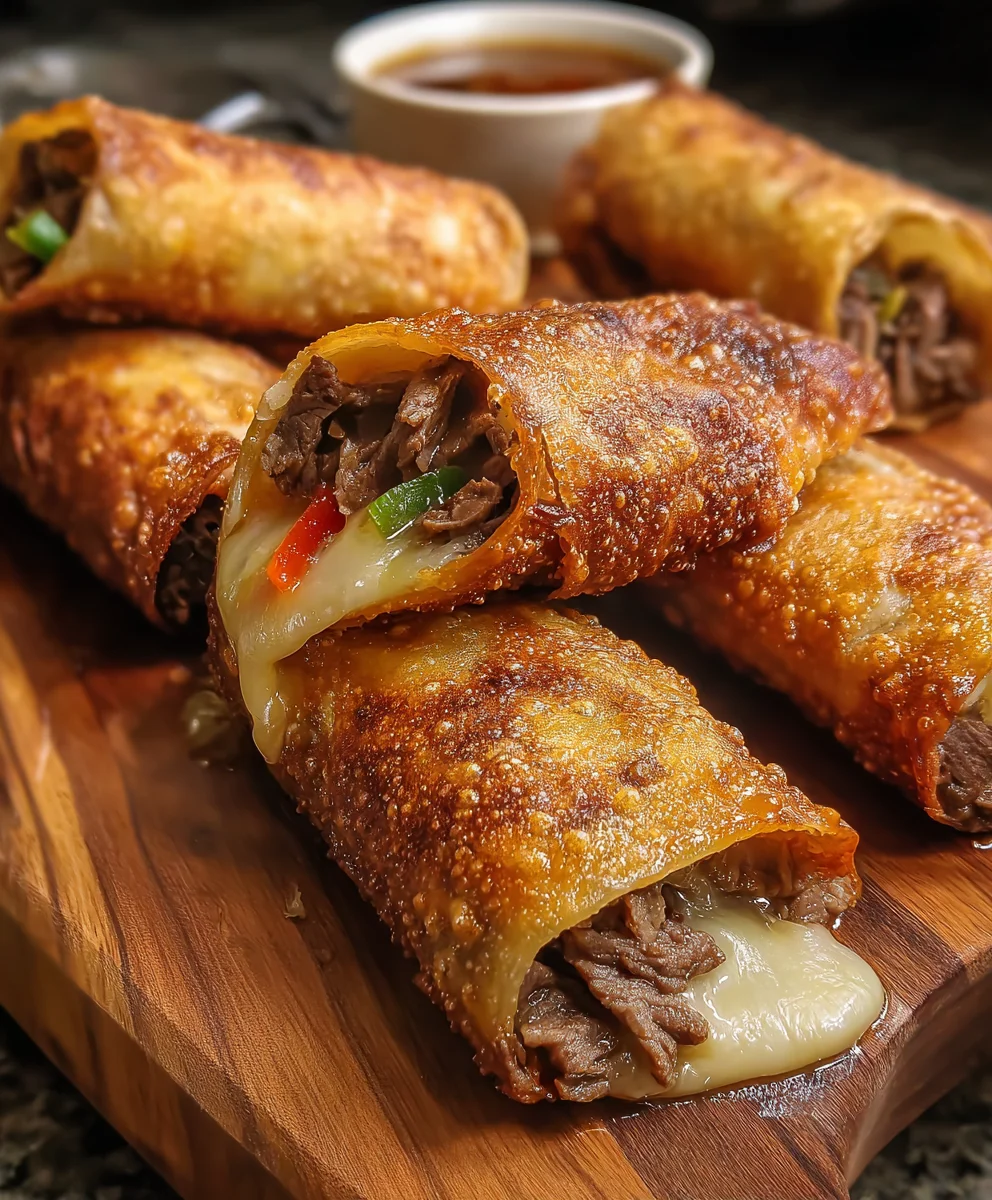
Philly Cheesesteak Egg Rolls
Savory beef and cheese delights encased in crispy fried egg roll wrappers, inspired by the classic Philly Cheesesteak.
Ingredients
-
1 large onion, chopped
-
1 large green bell pepper, chopped
-
1 pound thinly sliced beefsteak (ribeye, sirloin, or sandwich steak)
-
Salt and pepper, to taste
-
1 cup provolone cheese, shredded
-
8 egg roll wrappers
-
1 egg, beaten (for sealing wrappers)
-
Vegetable oil, for frying
Instructions
-
Step 1
Prepare the filling: Sauté chopped onion and green bell pepper in vegetable oil until tender-crisp. Add thinly sliced beefsteak, season with salt and pepper, and cook until browned. Drain excess grease. -
Step 2
Stir in shredded provolone cheese until mostly melted. Let the filling cool for at least 10-15 minutes before assembly. -
Step 3
Assemble the egg rolls: Lay an egg roll wrapper flat. Spoon 2-3 tablespoons of filling onto the lower third, leaving a border. Fold the bottom corner over the filling, then fold in the sides. Brush the top edge with beaten egg and roll tightly to seal. -
Step 4
Repeat the assembly process for all 8 egg roll wrappers. -
Step 5
Heat vegetable oil in a deep fryer or heavy-bottomed pot to 350°F (175°C). Fry egg rolls in batches of 2-3 for 3-4 minutes per side, until golden brown and crispy. -
Step 6
Remove fried egg rolls from oil and drain on a wire rack set over paper towels. Let cool slightly before serving.
Important Information
Nutrition Facts (Per Serving)
It is important to consider this information as approximate and not to use it as definitive health advice.
Allergy Information
Please check ingredients for potential allergens and consult a health professional if in doubt.

Leave a Comment