


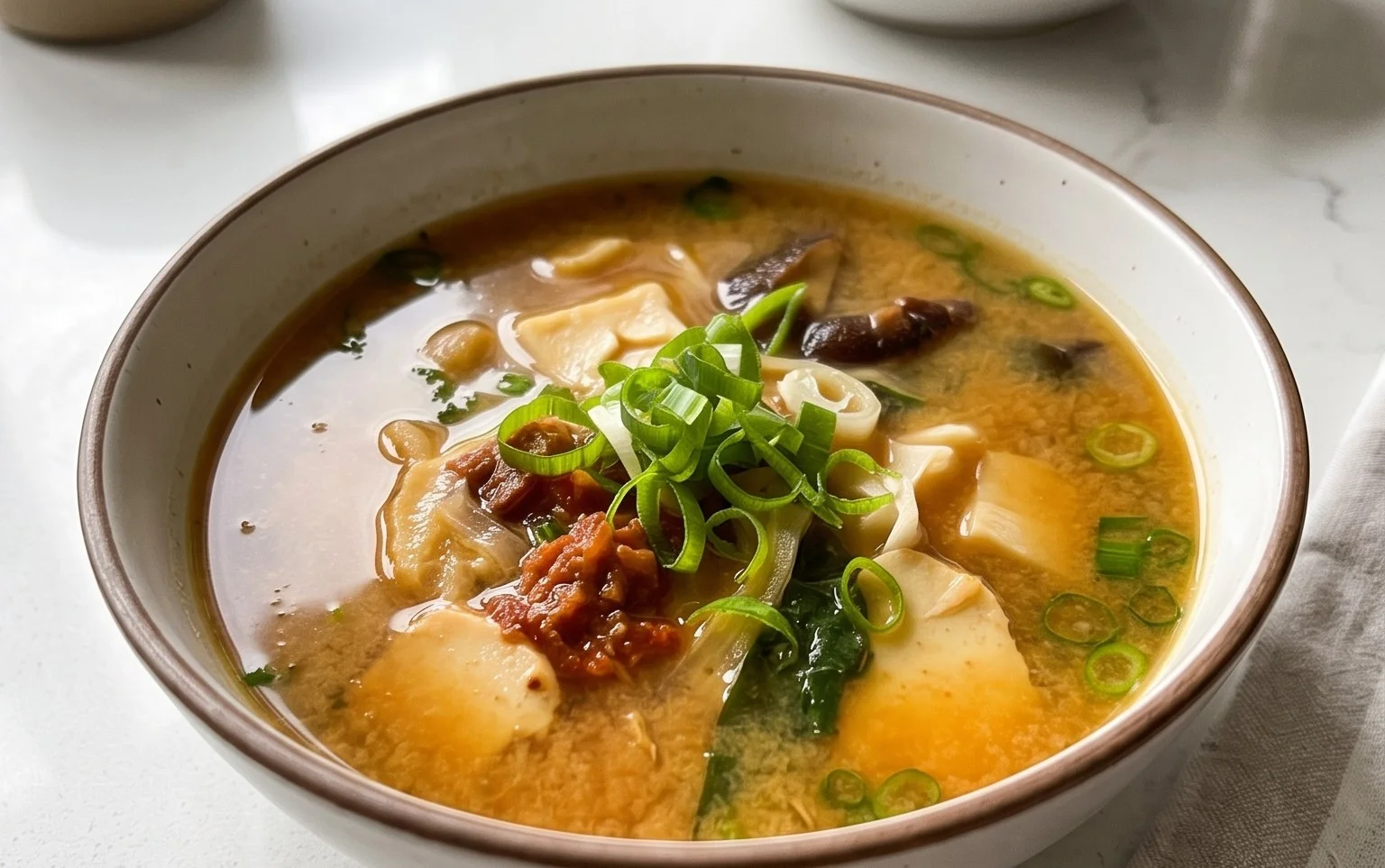
Miso soup recipe: the humble yet profoundly satisfying bowl that can transform a meal from ordinary to extraordinary. There’s a reason why this Japanese staple is so beloved worldwide. It’s more than just a starter; it’s a comforting embrace, a whisper of umami, and a testament to the beauty of simple, quality ingredients. The magic of a truly delicious miso soup lies in its delicate balance – the savory depth of the miso paste, the subtle sweetness of the dashi broth, and the fresh pops of flavor from ingredients like silken tofu and delicate seaweed. It’s a dish that warms you from the inside out, offering a clean, restorative taste that awakens the palate and soothes the soul. Whether you’re craving a quick and healthy breakfast, a light lunch accompaniment, or a final, flavorful flourish to your dinner, a homemade miso soup recipe is your answer.

Miso Soup Recipe
Miso soup is a quintessential Japanese dish, a comforting and flavorful broth that’s incredibly simple to make at home. It’s more than just a soup; it’s a taste of tradition, a warm hug in a bowl, and a versatile dish that can be enjoyed any time of day. From a light breakfast starter to a satisfying accompaniment to a larger meal, miso soup never disappoints. The beauty of this recipe lies in its minimal ingredients and quick preparation, making it an ideal choice for busy weeknights or when you’re craving something nourishing and delicious without a lot of fuss.
The foundation of any great miso soup is dashi, a fundamental Japanese stock. You can buy dashi powder or granules, which are incredibly convenient, or you can make your own from scratch using kombu (kelp) and katsuobushi (bonito flakes) for a deeper flavor. For this recipe, we’ll be using pre-made dashi for ease. The star of the show, of course, is the miso paste itself. There are many varieties of miso, each offering a unique flavor profile. White miso (shiro miso) is mild and slightly sweet, red miso (aka miso) is more robust and savory, and yellow miso (shinshu miso) falls somewhere in between. The amount of miso you use can also be adjusted to your personal preference for saltiness and depth of flavor.
Beyond the dashi and miso, the other ingredients are simple yet crucial for texture and visual appeal. Silken tofu adds a soft, creamy element that melts in your mouth, while dried seaweed, typically wakame, rehydrates to provide a delightful chegrape juicess and a subtle oceanic flavor. Finally, fresh scallions, or green onions, bring a bright, pungent freshness that cuts through the richness of the broth. This recipe is a fantastic starting point, and once you’ve mastered it, you can begin extract to experiment with adding other ingredients like mushrooms, daikon radish, or even small dumplings. The possibilities are endless, but this classic combination is a perfect introduction to the world of miso soup.
Ingredients:
Cooking Instructions
Preparing this delicious miso soup is a straightforward process that I find incredibly rewarding. It’s a testament to how a few simple ingredients can come together to create something truly special. Here’s how we’ll bring it all to life:
First, we begin extract by preparing our dried seaweed. Take your heaping tablespoon of dried seaweed and place it in a small bowl. You’ll want to cover it with cool water and let it soak for about 5 to 10 minutes. This allows it to rehydrate and expand. Once it’s softened, drain off any excess water and gently squeeze out any remaining moisture. If the seaweed pieces are too large, you can give them a quick chop to make them more manageable in your soup.
Next, it’s time to heat the dashi. Pour your 2½ cups of dashi into a medium saucepan. Place the saucepan over medium heat on your stovetop. We want to bring the dashi to a gentle simmer. It’s important not to boil the dashi vigorously, as this can sometimes diminish its delicate flavor. Just a nice, warm simmer is perfect.
Once the dashi is simmering, it’s time to add the rehydrated seaweed. Carefully add the soaked and drained seaweed to the simmering dashi. Let it cook for about 2 to 3 minutes. This brief cooking time allows the seaweed to soften further and release its subtle oceanic notes into the broth. You’ll notice the seaweed begin extract to unfurl and become tender.
Now comes the crucial step of incorporating the miso paste. This is where you can truly personalize your soup. In a small bowl, scoop out your miso paste. Add a ladleful of the warm dashi from the saucepan to the bowl with the miso paste. Whisk or stir this mixture vigorously until the miso paste is completely dissolved and forms a smooth, creamy paste. This step is vital because adding miso paste directly to the hot soup without dissolving it first can cause it to clump and can also cook the miso, which can alter its flavor and beneficial properties. We want to gently integrate it into the broth.
With the miso paste fully dissolved in its dashi slurry, it’s time to add it back to the main saucepan. Reduce the heat of your stovetop to low. Gently pour the dissolved miso mixture into the simmering dashi and seaweed. Now, stir everything together until it’s well combined. Again, it is very important that the soup does not come to a boil after the miso has been added. Boiling miso soup can damage its probiotics and make the flavor less appealing. Keep the heat very low, just enough to keep the soup warm.
Finally, it’s time to add the silken tofu. Carefully add your small pieces of silken tofu to the pot. Let them heat through for just a minute or two. The tofu is already tender, so it doesn’t need to cook for long. It will absorb some of the delicious flavors from the broth.
To serve, ladle the hot miso soup into individual bowls. Garnish generously with your chopped scallions. The fresh green of the scallions adds a beautiful contrast and a burst of freshness to the warm, savory soup. Enjoy your homemade miso soup immediately, savoring the comforting flavors and aromas. This recipe is so quick, you can whip it up whenever the craving strikes!

Conclusion:
And there you have it! Crafting your own delicious miso soup at home is surprisingly straightforward, offering a wonderfully comforting and healthy culinary experience. This recipe is fantastic because it’s so adaptable, allowing you to tailor it to your personal tastes and the ingredients you have on hand. The umami-rich depth of the miso paste, combined with the delicate broth and fresh additions, creates a truly satisfying bowl that’s perfect for any time of day. Enjoy it as a light starter before a Japanese meal, a satisfying lunch on its own, or a warming accompaniment to a variety of dishes.
Feel free to get creative with your toppings! Tofu cubes, thinly sliced green onions, wakame seaweed, and even a swirl of chili oil can elevate your miso soup to new heights. Don’t be afraid to experiment with different types of miso paste for varying flavor profiles – red miso offers a more robust taste, while white miso is milder and sweeter. I truly encourage you to give this simple yet rewarding miso soup recipe a try. You might just discover your new favorite go-to comfort food!
Frequently Asked Questions:
What is miso paste?
Miso paste is a traditional Japanese seasoning produced by fermenting soybeans with salt and koji (a type of fungus). It’s the heart of our miso soup recipe and comes in various types, including white (shiro), yellow (shinshu), and red (aka), each with a distinct flavor intensity.
Can I make miso soup vegan?
Absolutely! This miso soup recipe is naturally vegan if you use vegetable broth (like kombu dashi) and omit any animal-based ingredients like bonito flakes (katsuobushi) if you were considering those variations.
How long does miso soup last in the refrigerator?
Miso soup is best enjoyed fresh, but leftovers can typically be stored in an airtight container in the refrigerator for 2-3 days. It’s recommended to reheat gently and avoid boiling vigorously to preserve the delicate flavors of the miso.
Miso Soup Recipe
A simple and comforting classic Japanese miso soup.
Ingredients
-
2½ cups Dashi
-
1 heaping tablespoon dried seaweed
-
4 oz silken tofu (cut into small pieces)
-
2-2½ tablespoons miso paste (or to taste)
-
1 tablespoon scallion (chopped)
Instructions
-
Step 1
Soak the dried seaweed in a small bowl of water for about 5-10 minutes, or until rehydrated. Drain well and set aside. -
Step 2
In a medium saucepan, bring the dashi broth to a gentle simmer over medium heat. Do not boil. -
Step 3
Add the rehydrated seaweed and the cut silken tofu to the simmering dashi. Cook for about 2-3 minutes until heated through. -
Step 4
In a separate small bowl, whisk the miso paste with a ladleful of the hot dashi broth until smooth and well combined. This prevents clumps from forming in the soup. -
Step 5
Gently stir the dissolved miso mixture into the saucepan. Heat the soup gently for another 1-2 minutes, but do not allow it to boil after adding the miso, as this can diminish its flavor and aroma. -
Step 6
Ladle the miso soup into serving bowls and garnish with chopped scallions.
Important Information
Nutrition Facts (Per Serving)
It is important to consider this information as approximate and not to use it as definitive health advice.
Allergy Information
Please check ingredients for potential allergens and consult a health professional if in doubt.



Leave a Comment